
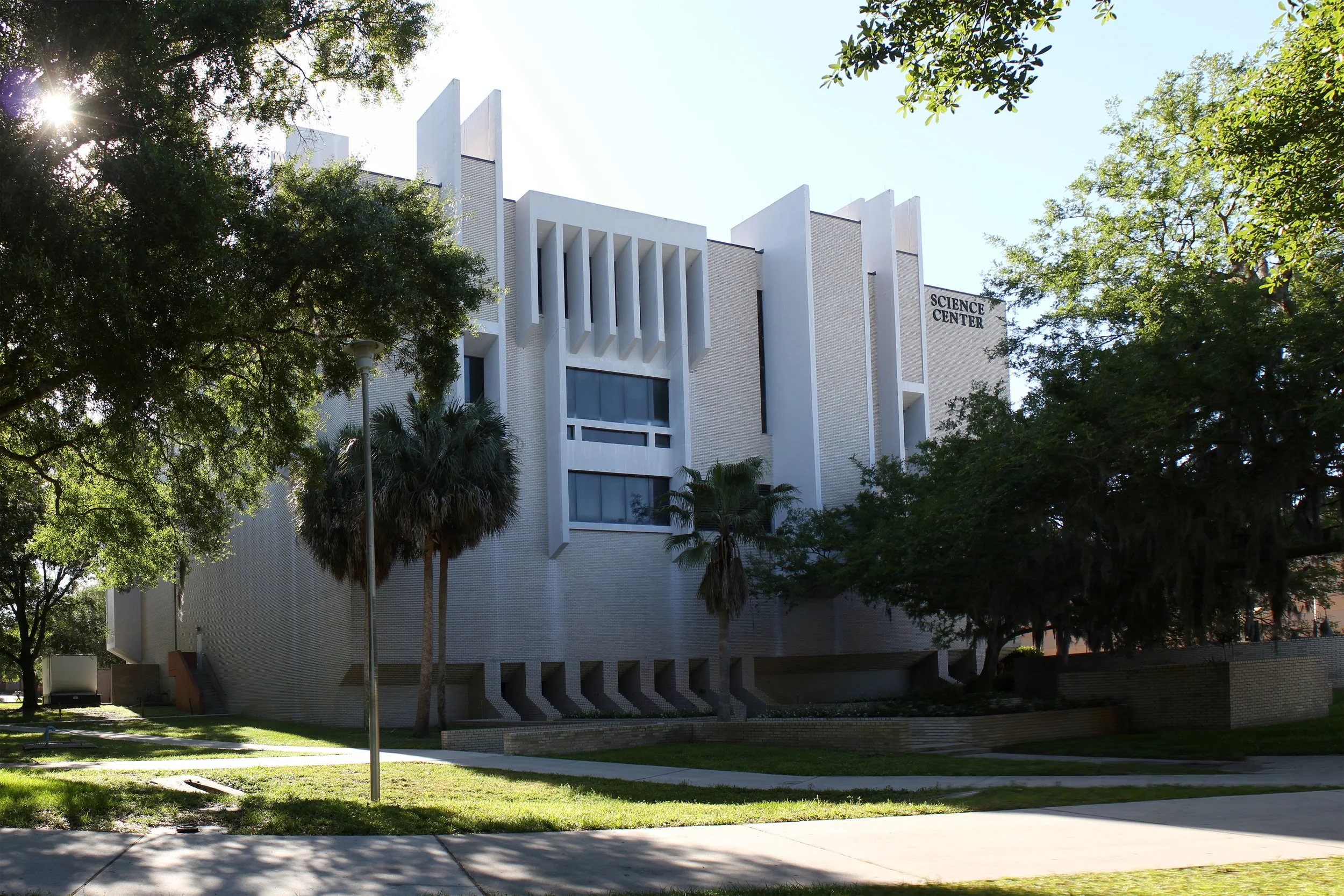
science center
Category
Client
Location
YeaR
Site
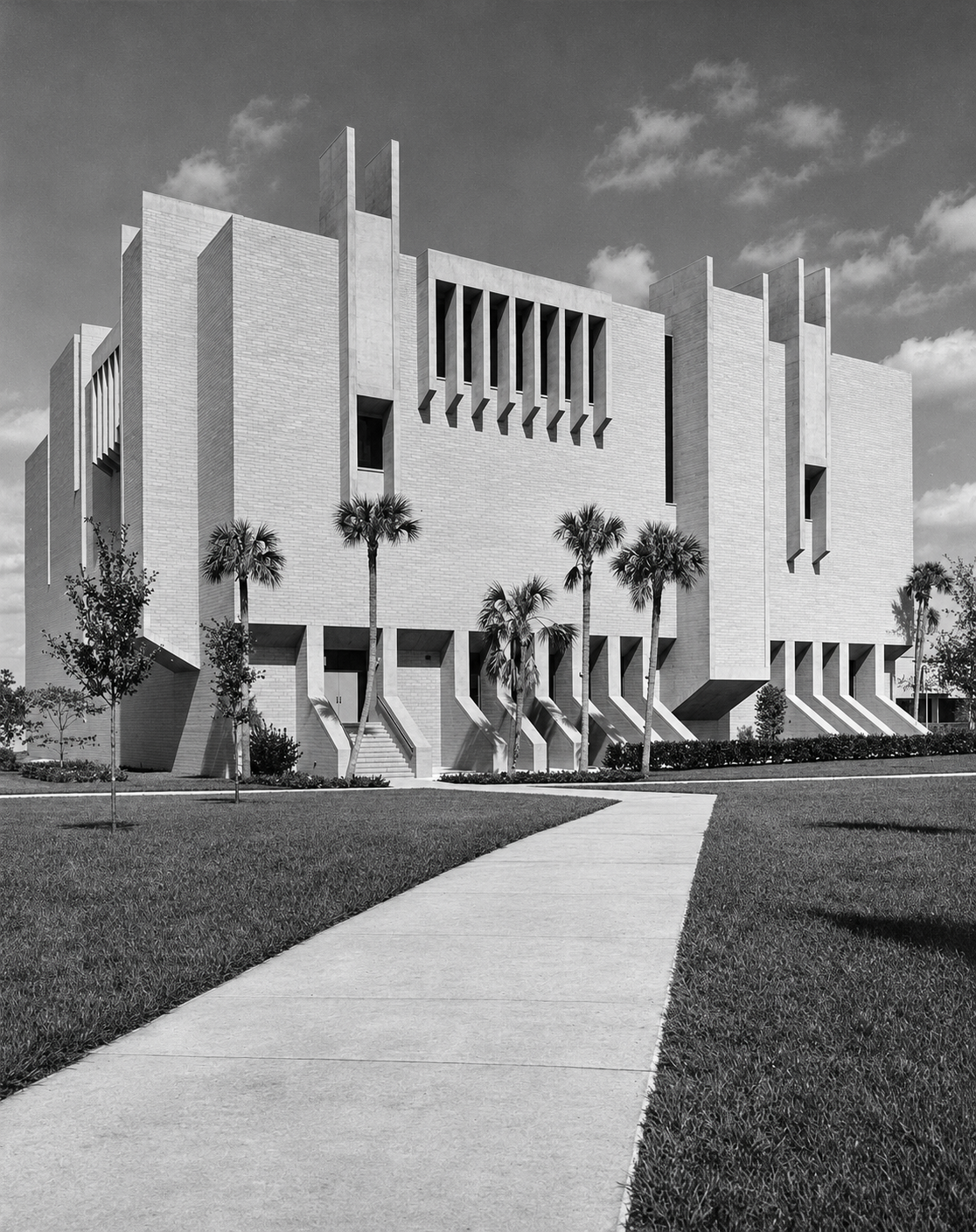
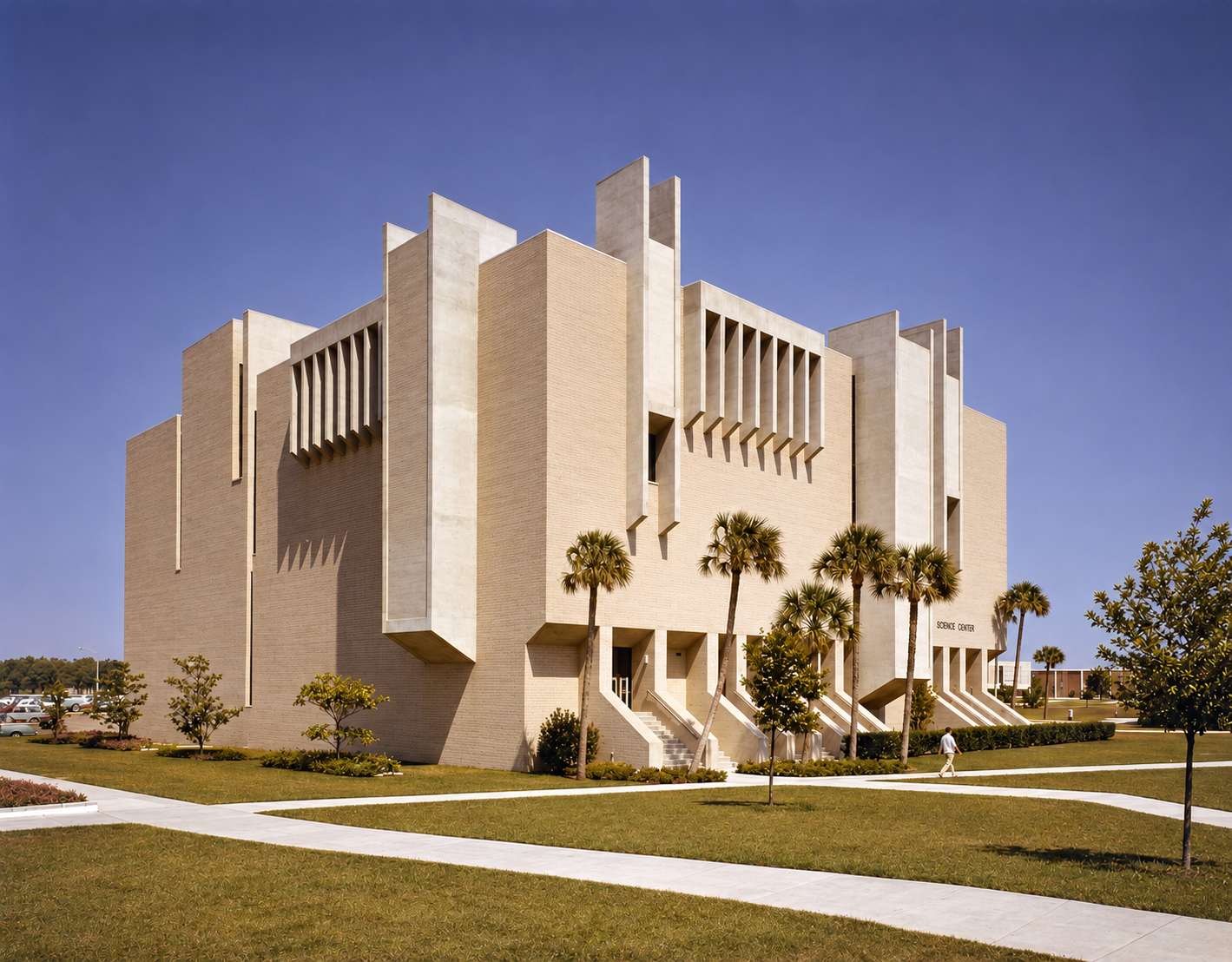
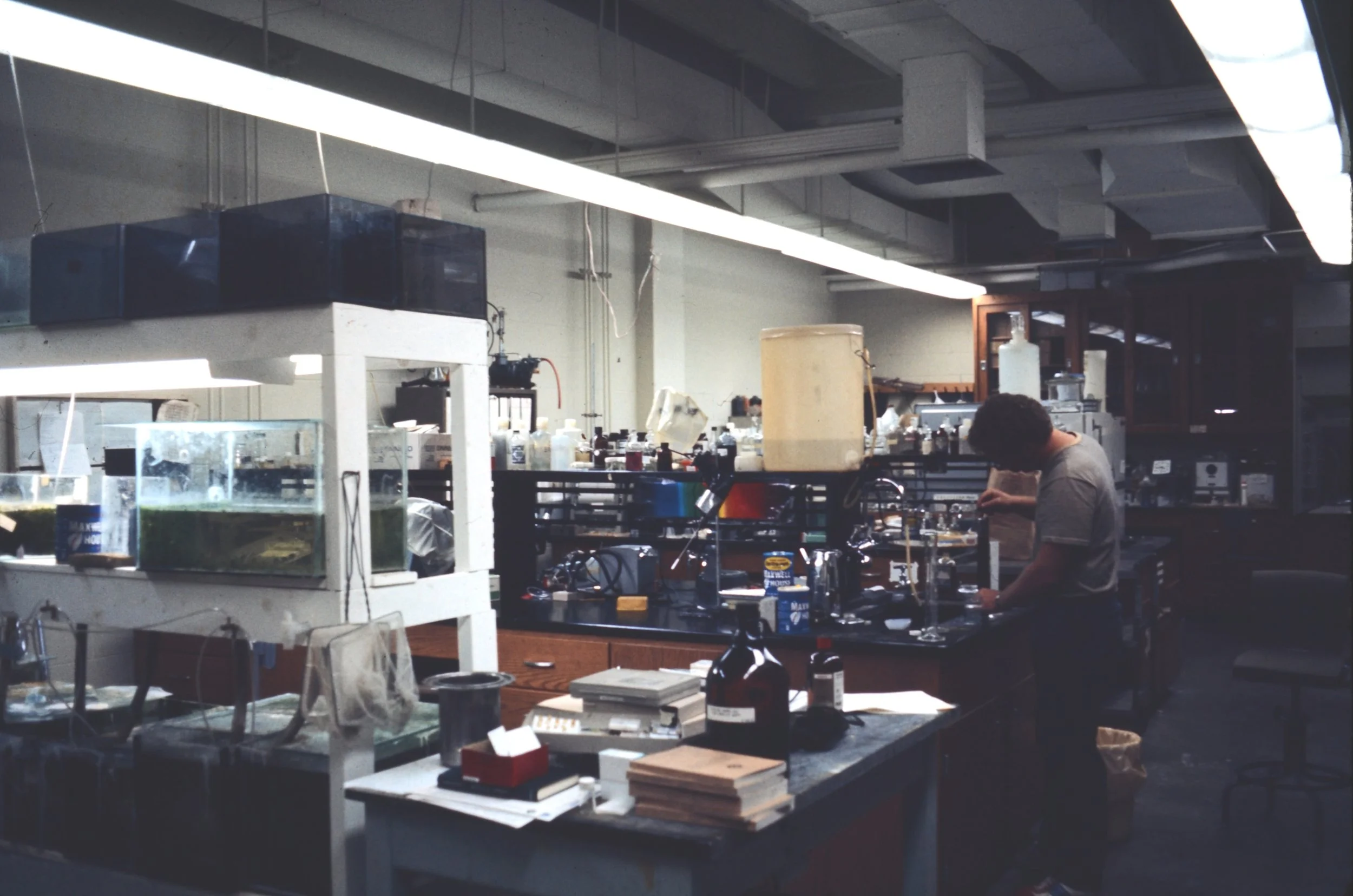
Constructed in 1968 on the University of South Florida's Tampa campus, the 92,000-square-foot Science Center was designed to accommodate the University's expanding research and academic programs. The building reflects an era of rapid institutional growth and an architectural approach that emphasizes the expressive potential of structure and building systems.
Program Challenge
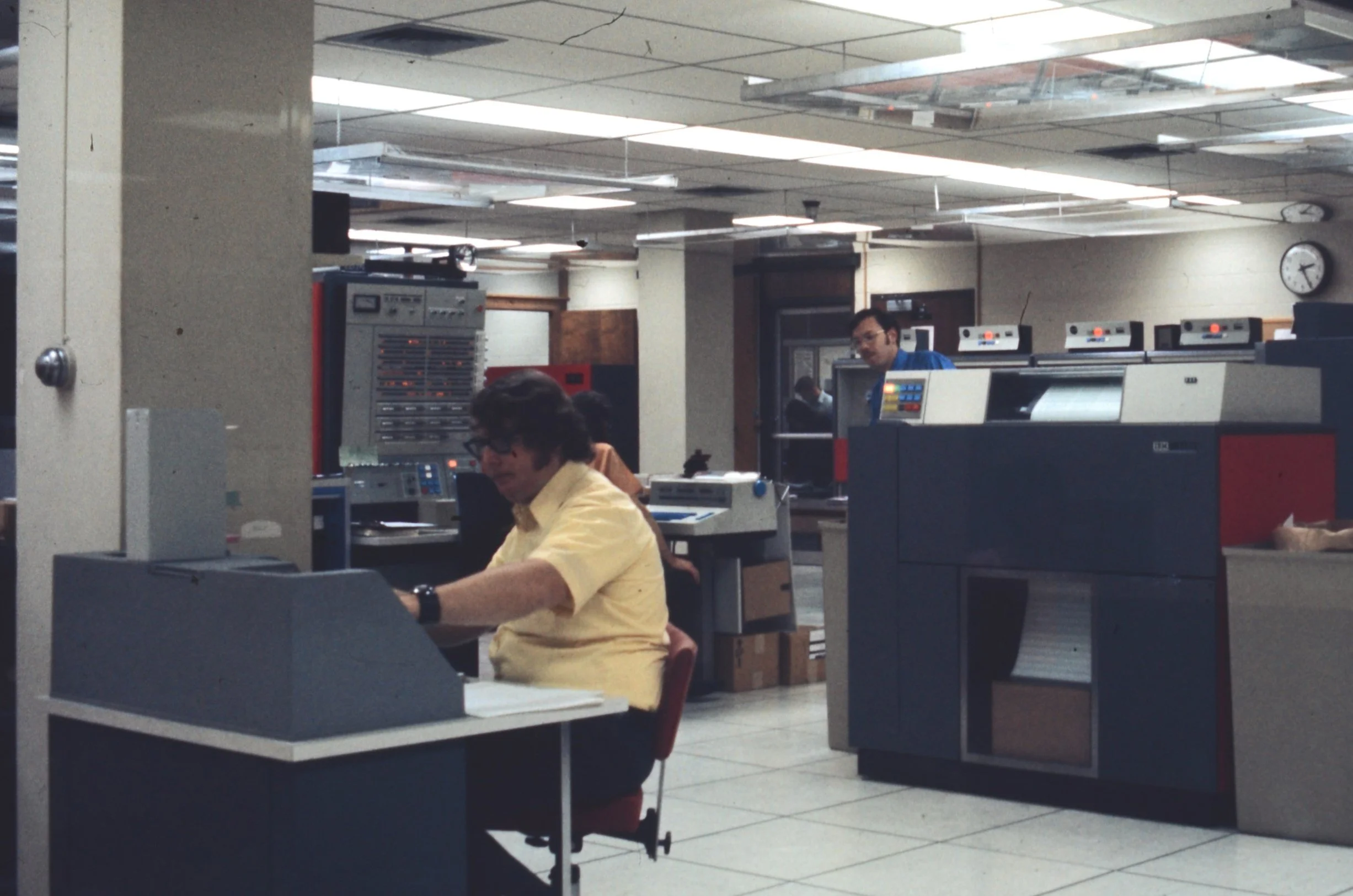
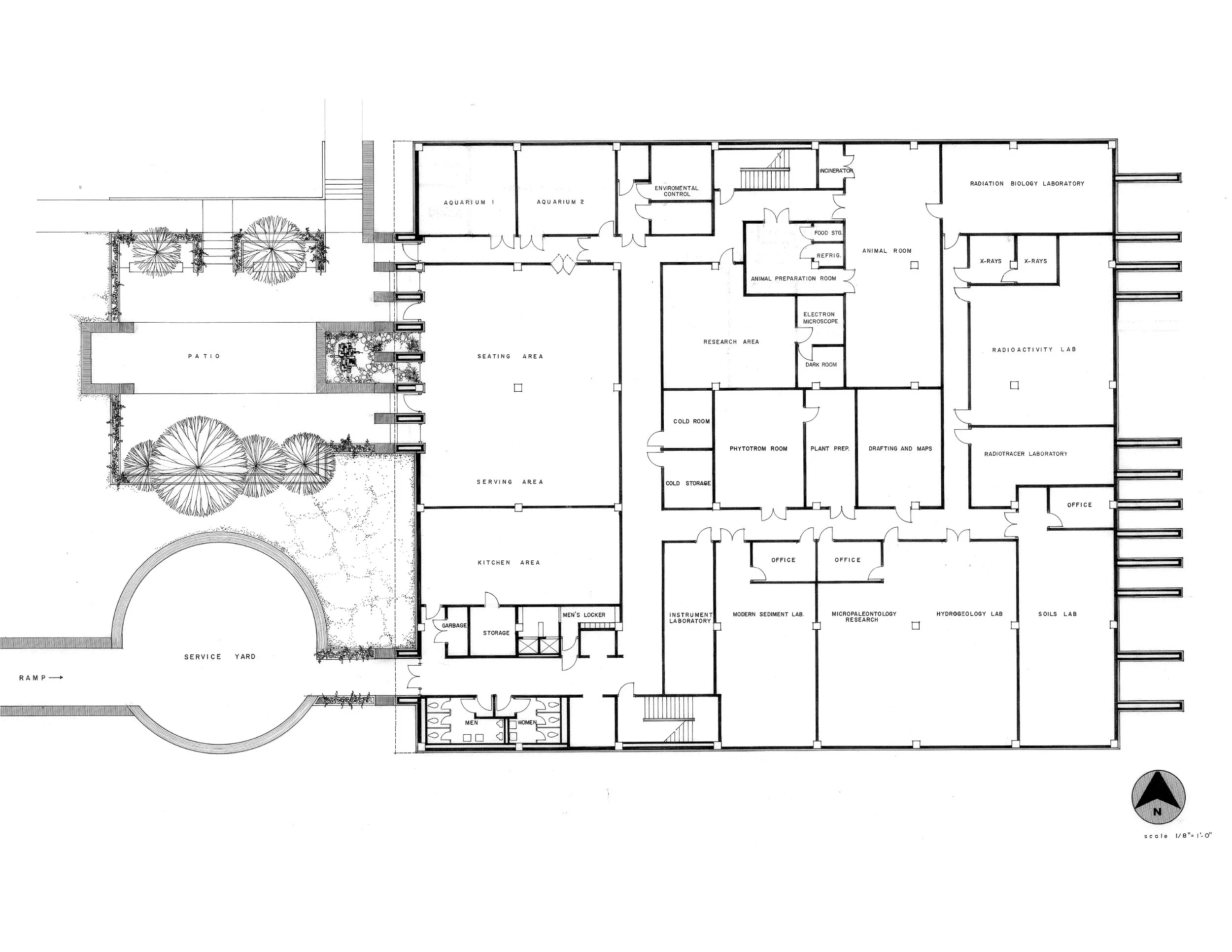
Accommodate a complex program of controlled-environment research laboratories, a university computer center, and a science library within a constrained construction budget. Extensive ventilation requirements and the need for adaptable laboratory spaces presented significant technical challenges, while the largely windowless building required an architectural expression appropriate to its prominent academic setting.
Solution
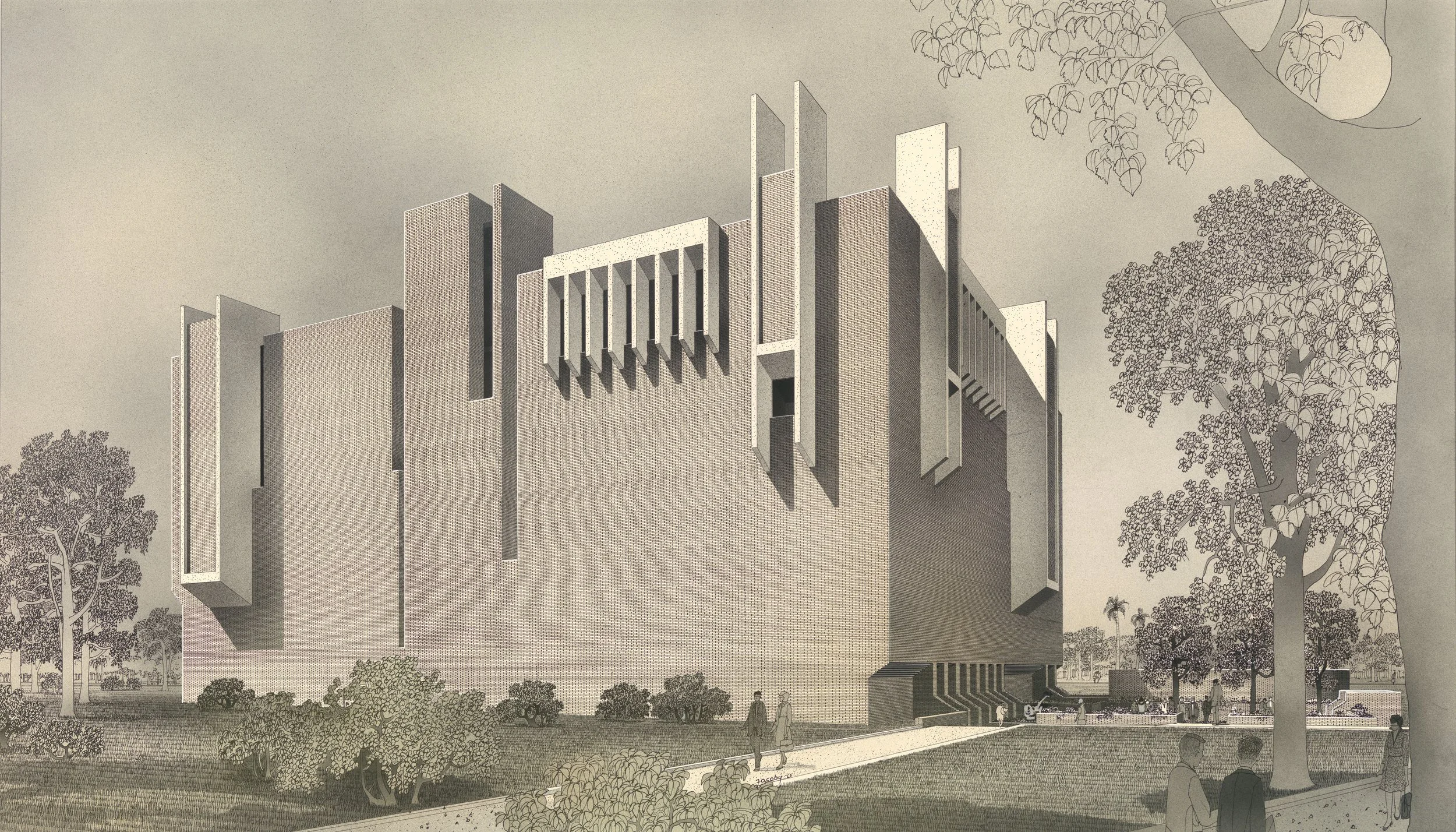
The Science Center transforms demanding technical requirements into the defining elements of its architecture. Conceived as a compact, largely windowless volume, the building responds to the environmental controls required for scientific research while maximizing efficiency and flexibility within a limited budget.
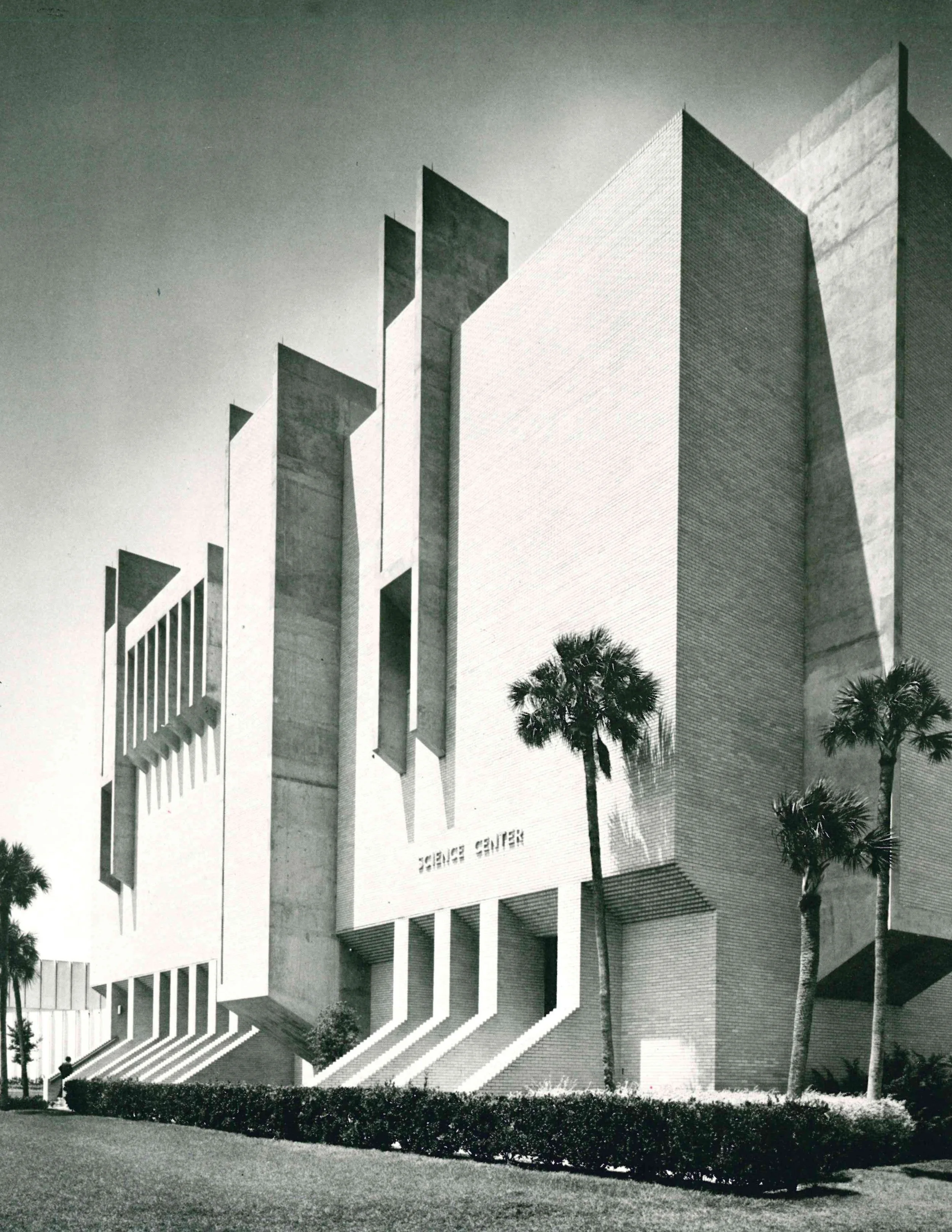
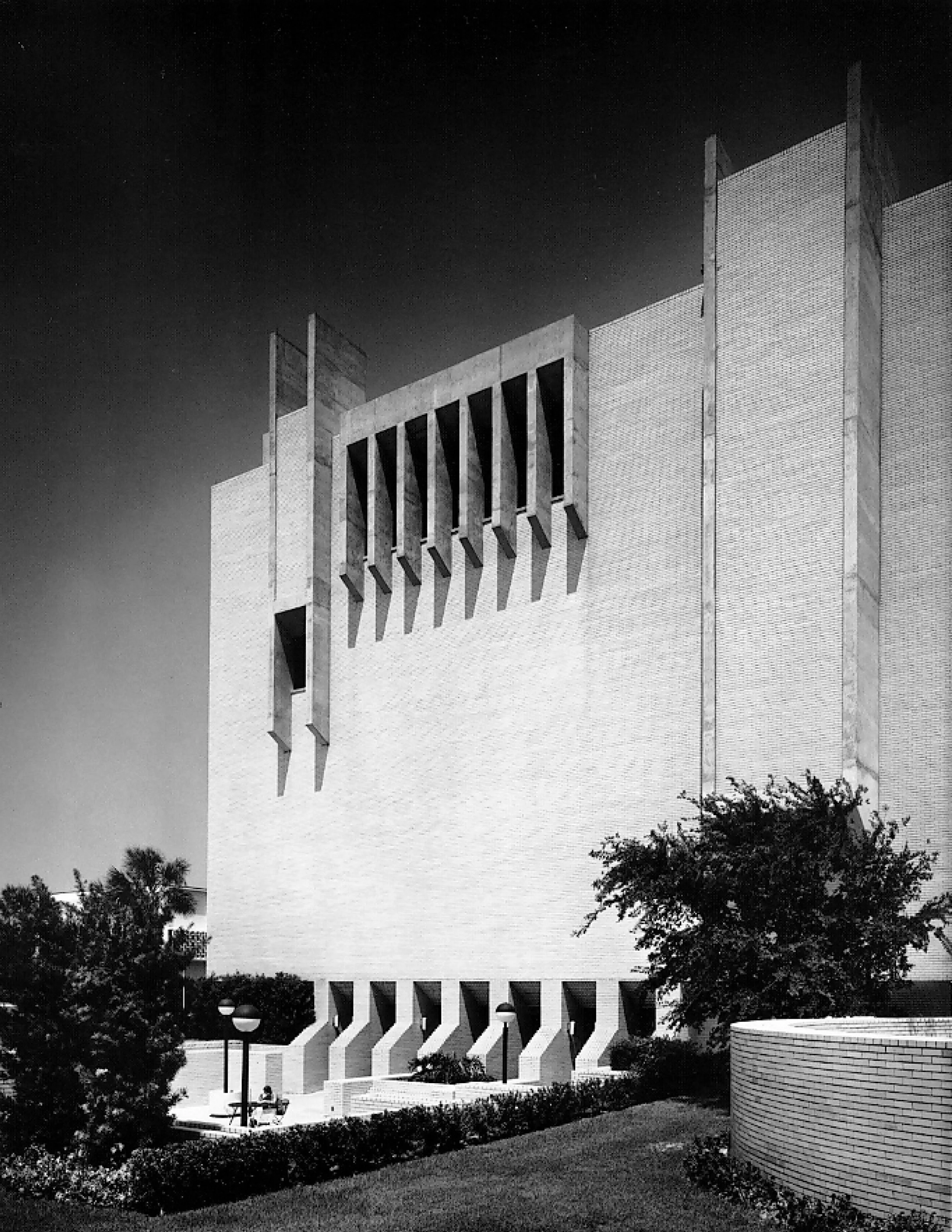
Rather than routing extensive laboratory exhaust systems through the building's interior, the design locates vertical duct shafts along the exterior perimeter. These shafts, articulated by projecting concrete fins, create a distinctive rhythm across the façades while freeing interior floor plates from intrusive vertical infrastructure. This strategy allows laboratory spaces to be more readily reconfigured as research needs evolve.
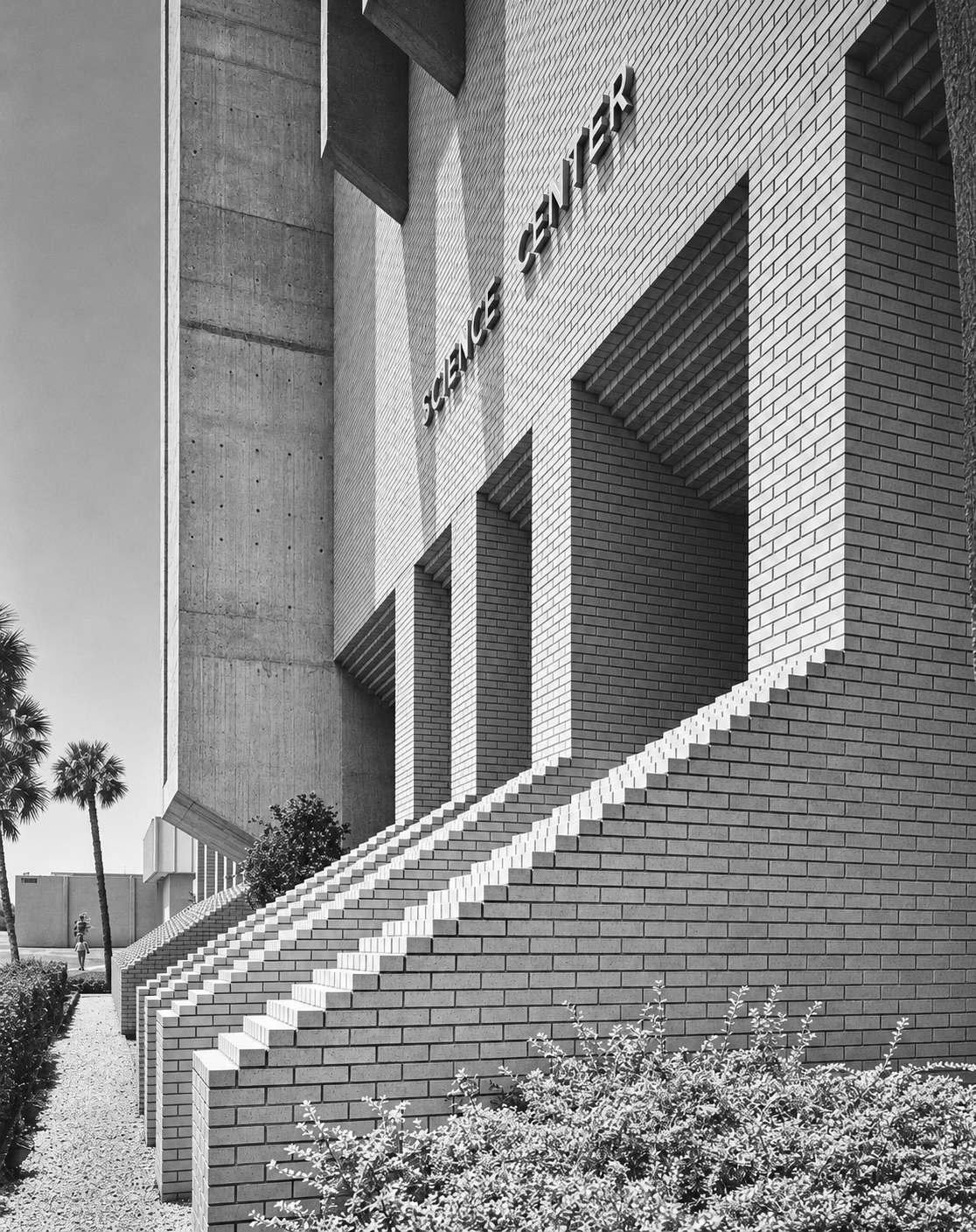
At the uppermost level, the Science Library introduces windows that bring natural light into the building and establish a visually distinct termination to the otherwise enclosed volume. At ground level, substantial brick fins frame the mechanical equipment room's intake and exhaust louvers, providing texture and a sense of scale at the building's base.
The resulting architecture demonstrates how the practical demands of a highly technical facility can generate a compelling design language. Through the deliberate expression of mechanical systems, material contrasts, and carefully articulated massing, the Science Center achieves a distinctive architectural identity rooted in its functional purpose.
Related Projects
University Student Center
University of South Florida - St. Petersburg
Nelson poynter memorial library
University of South Florida - St. Petersburg
